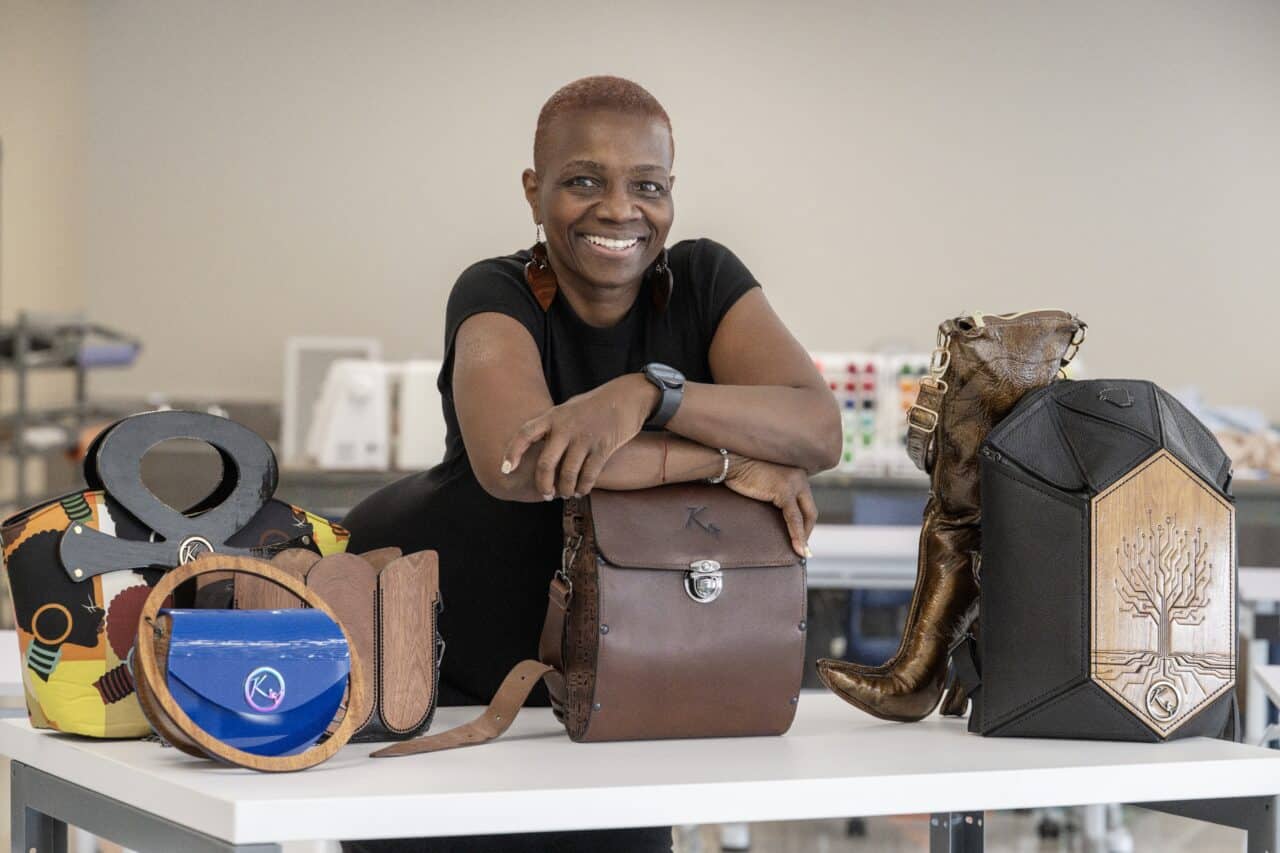
In a fashion world dominated by mass production, Karen “Kema” Maxwell chose a different path, built on craftsmanship, bold materials and individuality. As the founder of Kema’s Kreations LLC, Kema designs handbags that blur the line between accessory and art, combining wood, leather, and fabric into statement pieces meant to command attention. What began as a lifelong passion for sewing has grown into a distinctive fashion brand with designs showcased on television and runways, proving that creativity paired with strategic business support can transform a small studio idea into a growing enterprise.
Kema formally established her business in 2016, later securing her LLC status as the company evolved. From the beginning, her design philosophy was clear: create pieces that stand out from mass production by combining natural materials, particularly wood and leather, to create functional art pieces that command attention. The result is a collection of handcrafted bags that allow their wearers to express individuality and confidence. When asked, why bags? Kema explains that “a bag is simple. It’s a one-and-done item that allows me to express my creativity without continuously editing the final product. If you like it, you buy it. If you don’t, you move on. But when someone carries one of my bags, they stand out.”
With that mindset, Kema began purposely building her business and her brand starting with expanding beyond the walls of her home studio. Through a personal connection, she was introduced to the Community Loan Fund of the Capital Region, a nonprofit Community Development Financial Institution (CDFI) dedicated to strengthening communities through access to capital, training, and entrepreneurial support. Leasing an office suite at their business incubator located at 255 Orange St. in Albany, allowed Kema to expand production, separate her creative work from her home environment and operate within a professional setting that encouraged collaboration and growth. That first step soon opened the door to a much broader relationship. Over the years, Kema has engaged with nearly every layer of the Loan Fund’s entrepreneurial ecosystem, participating in training programs, mentorship opportunities, financing products and leadership opportunities within the organization itself.
Access to Capital for Strategic Growth
While Kema’s creative skills were well established, building a sustainable business required developing the operational and financial side of entrepreneurship as well. After a few years of operating in her incubator space Kema began to explore other services provided by Community Loan Fund which included the organization’s 9-week business planning course, a comprehensive training program designed to help entrepreneurs build sustainable businesses. The training helped her refine her business model, clarify her goals, and build a stronger foundation for long-term growth. “The biggest challenge in business is not knowing what you don’t know,” she says. “Being able to sit in a workshop and ask questions of people who are trained to help entrepreneurs succeed makes a huge difference.” Kema ultimately completed the program twice, returning after pivoting her business during the COVID-19 pandemic to strengthen her strategy and adapt to new market realities. “I would not still be in business if it wasn’t for the Community Loan Fund,” she says. “The training and programs helped me understand the parts of business you don’t know when you start. When you don’t know what you don’t know, having experts in the room who want you to succeed is priceless.”
Like many small business owners, particularly those in the early stages of growth, Kema faced financial barriers while building her company. Most notably was right after the COVID-19 pandemic when she repivoted her company from sewing masks back to producing her handmade bags. Kema received a grant from the Capitalize Albany Corporation but needed to secure financing to purchase supplies first and be reimbursed by the grant. Access to flexible financing for small businesses can be difficult through traditional banks, but Kema found that the Community Loan Fund offered a more accessible and supportive approach.
“The process was easier than I expected,” she says. “When you engage in the loan process with the Community Loan Fund, they will work with you and take your business seriously.” For many entrepreneurs, this kind of financial partnership can be the difference between a business surviving or closing its doors.
Kema’s relationship with the Community Loan Fund eventually grew beyond participant to leader and advocate. After years of engaging with the organization’s programs and resources, she became a board member, helping guide decisions that impact other small businesses throughout the region. Her continued collaboration with the Loan Fund reflects the organization’s mission: empowering entrepreneurs not only to grow businesses, but also to strengthen the broader community. “I’ve been part of the Community Loan Fund ecosystem since 2018,” Kema says. “And as we get closer to ten years of working together, I look forward to continuing to build the community and support other small businesses like mine.”


National Recognition and Creative Impact
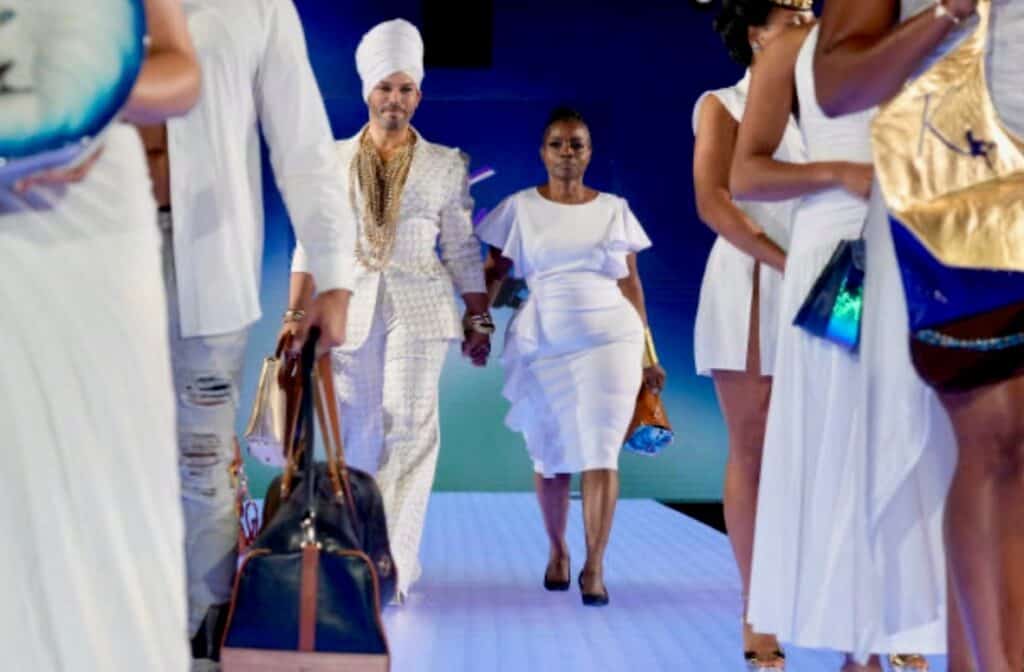
With the support of training, mentorship, financing, and community partnerships, Kema’s brand has gained increasing recognition both locally and nationally. Her bags have appeared on the long-running television show General Hospital, and her designs have been showcased at New York Fashion Week twice with invitations extended to LA, London and Milan Fashion Week. Locally, she has also been featured in media segments and public events highlighting small business innovation and entrepreneurship in the Capital Region. These milestones represent more than personal success; they demonstrate what is possible when entrepreneurs have access to the right ecosystem of support.
Today, Kema continues to expand her brand’s visibility while refining the structure of her business. One of her next goals is to build a stronger operational team so she can focus more on design and production, the areas where her strengths lie. “In entrepreneurship you wear every hat,” she explains. “Eventually, you want to build a team so you can focus on what you do best.” In addition to running her business, Kema also teaches Global Fashion at Capital Region BOCES and serves as Director of the BIPOC Business Growth Initiative at the Capital Region Chamber, helping other entrepreneurs find the same opportunities that helped her grow.
Entrepreneurs rarely succeed in isolation. For Kema, access to the right resources, from training and mentorship to workspace and financing, played an important role in strengthening her business foundation. Programs offered through the Community Loan Fund of the Capital Region help provide these same opportunities to entrepreneurs across the region, supporting small businesses as they grow, adapt, and bring new ideas to life. Through business planning courses, technical assistance, and access to flexible capital, the Loan Fund continues to help entrepreneurs like Kema turn creative vision into sustainable businesses. If you would like to support Kema or purchase a one-of-a-kind bag, feel free to look through her current inventory on her website www.shopkema.com.